
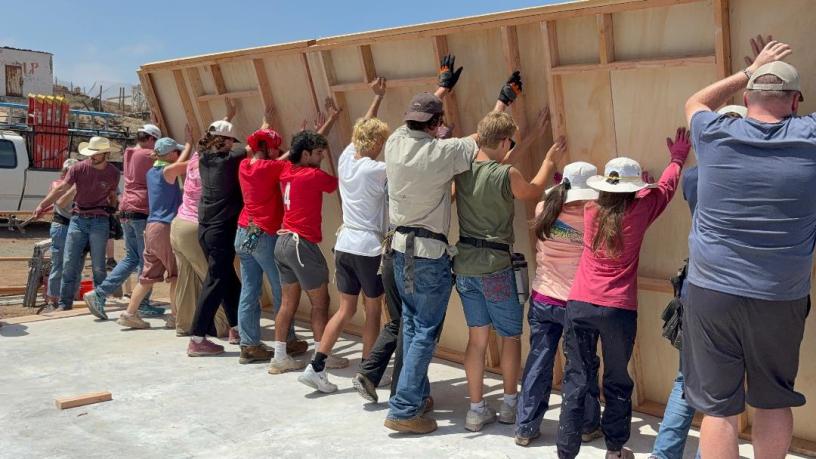
Our basis for short-term missions is the Incarnation. The Incarnation of the eternal Son of God to earth as a human being: Jesus, the carpenter and rabbi from Nazareth. Incarnation simply means “in the flesh.” God, Himself, came to earth as a human being – literally, in the flesh!
Both the basis for, and the value of, short-term missions is the example that Jesus Himself set for us when He left heaven, temporarily, to come to earth, incarnationally, in the flesh, to live life among us, as one of us, Himself, in-person. As Christians, when we practice missions activities, we follow the incarnational model of ministry that Jesus Himself set for us.
Short-term mission trips are inefficient by worldly standards. Why would you spend all that money to send 23 people from Georgia to go build a house on the west coast of Mexico when you could just send that money and employ locals to build it? Honestly, that’s a fair question. If mission trips are just a matter of dollars and cents, and of bricks and mortar, then – yes – it would be more efficient to just send the money.
But that’s not the purpose of short-term missions.
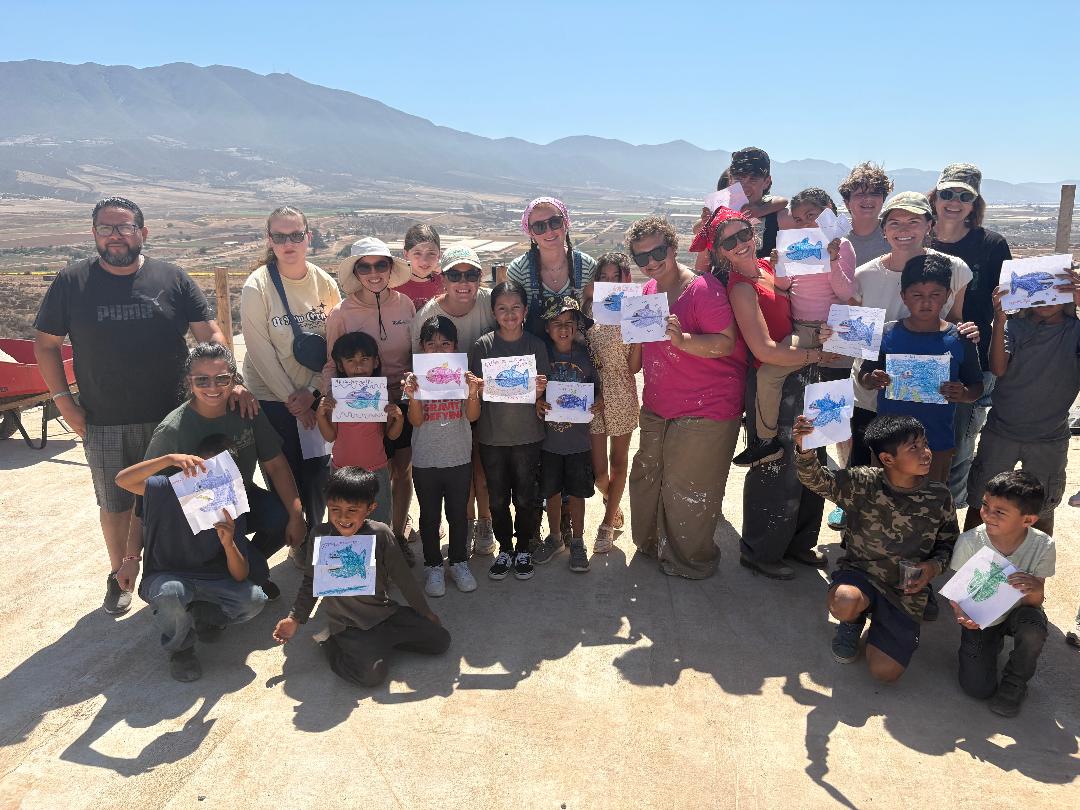
The value judgment of efficiency all depends on what you think the purpose of short-term missions is. Is it to build a house? If so, then yeah, there are more efficient ways to do it. Is it to provide a multi-day Bible School program for kids? There are more efficient ways to do that.
But what’s the point of short-term missions? What’s the real purpose behind going? Why should we be incarnational in our missions efforts?

Let’s look at Jesus’ life – from a wordly point-of-view. By the world’s standards, what did Jesus’ life on earth accomplish? He healed lots of people – that’s a good thing. He delivered many people from demons, and addictions, and chronic problems in their lives – that’s good. For three years, He traveled from village to village teaching people good lessons and memorable stories and challenged the religious status quo of mankind. (Am I giving a good description of what the world might think of Jesus’ time on earth?)
So He did lots of good things… but to what end? He was arrested and executed by the Romans as a concession to Jewish popular opinion. So what was the point of it all? In the world’s eyes, what was the point? Even if He healed every disease and sickness across the face of the entire earth during His 3 years of ministry – so what? All those people still died. And that was only for one generation in history out of thousands. (The world has a pretty bleak outlook on Christian missions, amiright?!)
But just play along with me for a second: if that’s all Jesus’ life accomplished, then why come at all? Couldn’t God just snap His fingers and heal everybody’s diseases? (Remember, I’m giving you a worldly way of thinking here.) Couldn’t God just deposit some teaching supernaturally and give encouragement straight from heaven directly into the hearts and minds of all those villages that Jesus went to? (We human beings are great at thinking of better ways for God to do stuff!)
From the world’s perspective, the Incarnation was terribly inefficient. Why come at all? Why all that effort? Why such a high cost? The price of the life of God’s Son…
But let’s take off the world’s glasses now, and instead, look at missions through God’s eyes.
Why did Jesus really come? What did it really accomplish? What was the true value of the Incarnation?
Look with me at Colossians 1:15-22 –
15 Christ is the visible image of the invisible God. He existed before anything was created and is supreme over all creation, 16 for through Him God created everything in the heavenly realms and on earth. He made the things we can see and the things we can’t see – such as thrones, kingdoms, rulers, and authorities in the unseen world. Everything was created through Him and for Him. 17 He existed before anything else, and He holds all creation together. 18 Christ is also the head of the church, which is His body. He is the beginning, supreme over all who rise from the dead. So he is first in everything.
19 For God in all His fullness was pleased to live in Christ, 20 and through Him God reconciled everything to Himself. He made peace with everything in heaven and on earth by means of Christ’s blood on the cross. 21 This includes you who were once far away from God. You were His enemies, separated from Him by your evil thoughts and actions. 22 Yet now He has reconciled you to Himself through the death of Christ in His physical body. As a result, He has brought you into His own presence, and you are holy and blameless as you stand before Him without a single fault.
The Incarnation accomplished infinitely more than just a single generation of physical healing and spiritual life lessons. God reconciled broken creation back to Himself through Christ’s very temporary and short-term life on earth. The healings Jesus performed and the teachings Jesus did – they had value on their own, but they were not the reasons He came. They were signs. They were signs, delivered in-person, by Jesus, to point people to God and to His loving redemptive plan.
The houses we build and the Bible School programs we provide and the other practical needs we meet on short-term mission trips – those are not the primary purposes of going. They are valuable, and they are appreciated – but they are signs, delivered in-person, by God’s people, to point others to God and to His loving redemptive plan.
Both the basis for, and the value of, short-term missions is the example that Jesus Himself set for us in the Incarnation. Incarnational ministry is the best way to accomplish God’s purposes for reaching the world with His redemptive love! We go, ourselves, in the flesh, in-person, to carry the message and the heart and the example of Christ’s love to His people around the world.
So what is the purpose of short-term missions? It’s 4 things:
- To encourage the believers there.
Paul wrote this over and over in his letters to the churches across the Mediterranean world: “I hope to come to you that I may give you some encouragement.” When my family were long-term missionaries serving in Africa, we had several loved ones come to visit us. And as much as we loved all the letters and phone calls and emails and care packages we received, there was just something incredibly special about those in-person visits!
We saw this with the Robertson family in Mexico this past week: they told us again and again how much it meant to have people from their home church visiting them, and working with them, and serving alongside them in their missionary community!
We heard it from so many local Christians there in Mexico: “Thank you for coming to my country! Thank you for coming to help my neighbors. Thank you for coming all the way from Georgia to serve with us and to experience our lives here with us for a few days.” Nothing else compares to the incarnational approach to ministry.
The second purpose of short-term missions is:
- To support the work of the long-term missionaries there.
We don’t just drop in out of nowhere to do our own thing and then leave. That’s when helping hurts. There’s actually been a resistance movement within the Christian Church for the last 25 years against that way of thinking – that missionaries can just parachute in, try to change everything in a village or region or culture, and then pack up and leave. That approach to missions does not work. That approach to missions can even be harmful to the Gospel message in a community.
Healthy short-term mission trips go in to support the ongoing, long-term mission efforts already in-progress in a city or region. We partner with ministries and churches that are already there, and we support them in the work they are already doing. Short-term missionaries bring a fresh infusion of energy and passion and heart – and frankly, manpower! – to help the long-term missionaries accomplish things that would take them months or years to do on their own.
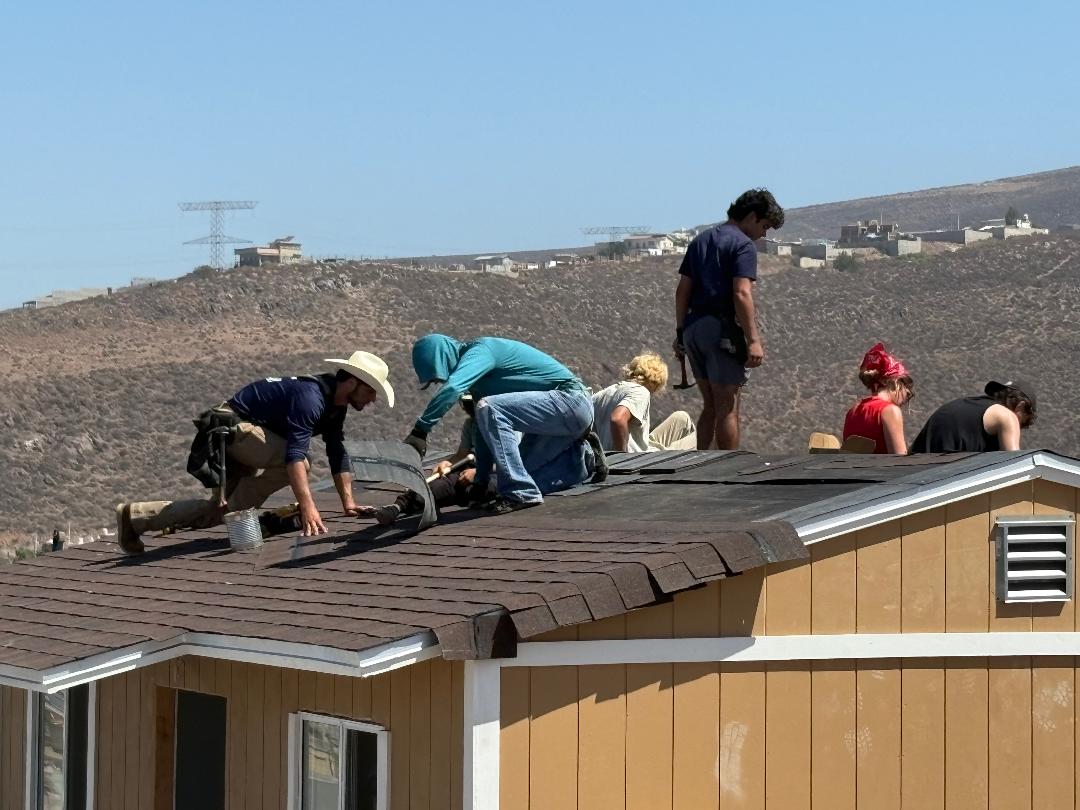
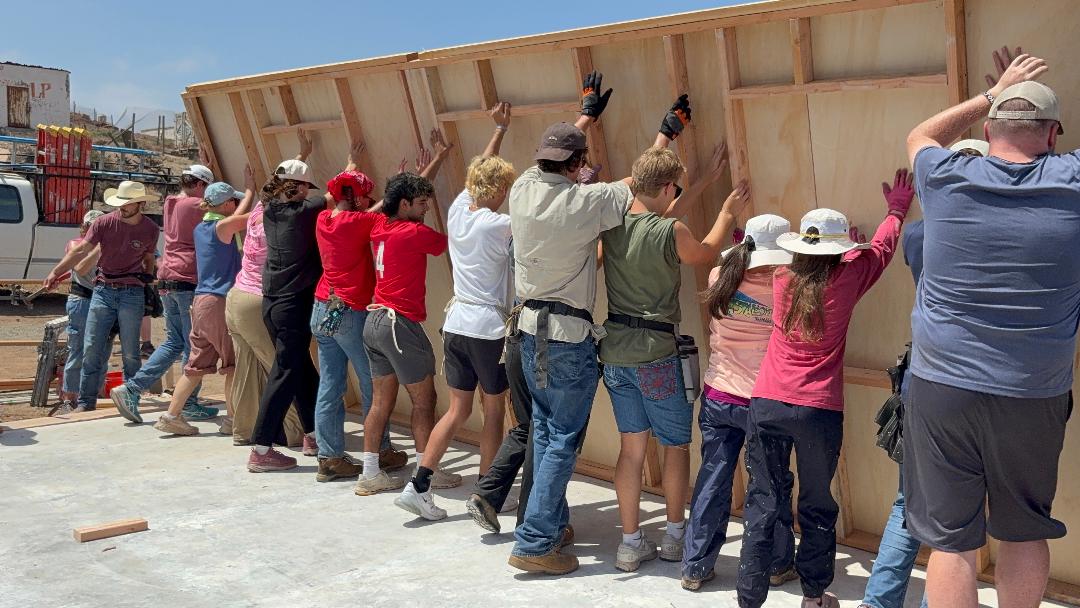
Last week, we built a house in 3½ days. And – 11 other homes were built by other short-term mission groups just like ours last week alone! When we showed up to our work sites on Monday morning, there were 12 concrete slabs scattered across Ensenada, with 12 families living in lean-to homes made of discarded building materials next to them. That was on Monday morning. On Thursday night, just 3½ days later, those same 12 families slept in brand-new, completed, constructed, furnished homes, built just for them, in Jesus’ Name! The Robertsons couldn’t do that. The Yugo staff couldn’t do that. But 12 short-term mission teams coming from across the U.S. could.
We follow the Incarnational model of Jesus in short-term missions, by going ourselves, in-person, to encourage the believers there and to help advance the ongoing Gospel work of the long-term missionaries who are serving there.
Thirdly and fourthly, we go:
- To see the world through God’s eyes.
- And then to personally carry those visions from the field back to our home churches.
This, again, is exactly what Paul and Silas and Barnabas and Peter and many other early disciples did on their short-term missionary journeys. They went 1-to encourage the distant believers, 2-to support the long-term work of the Gospel in those areas, 3-to see the world comprehensively through God’s eyes, and 4-to carry their stories and experiences back to their home churches for their encouragement and partnership in prayer.


Amen and amen! Great perspective and perfect explanation.
Ernie